

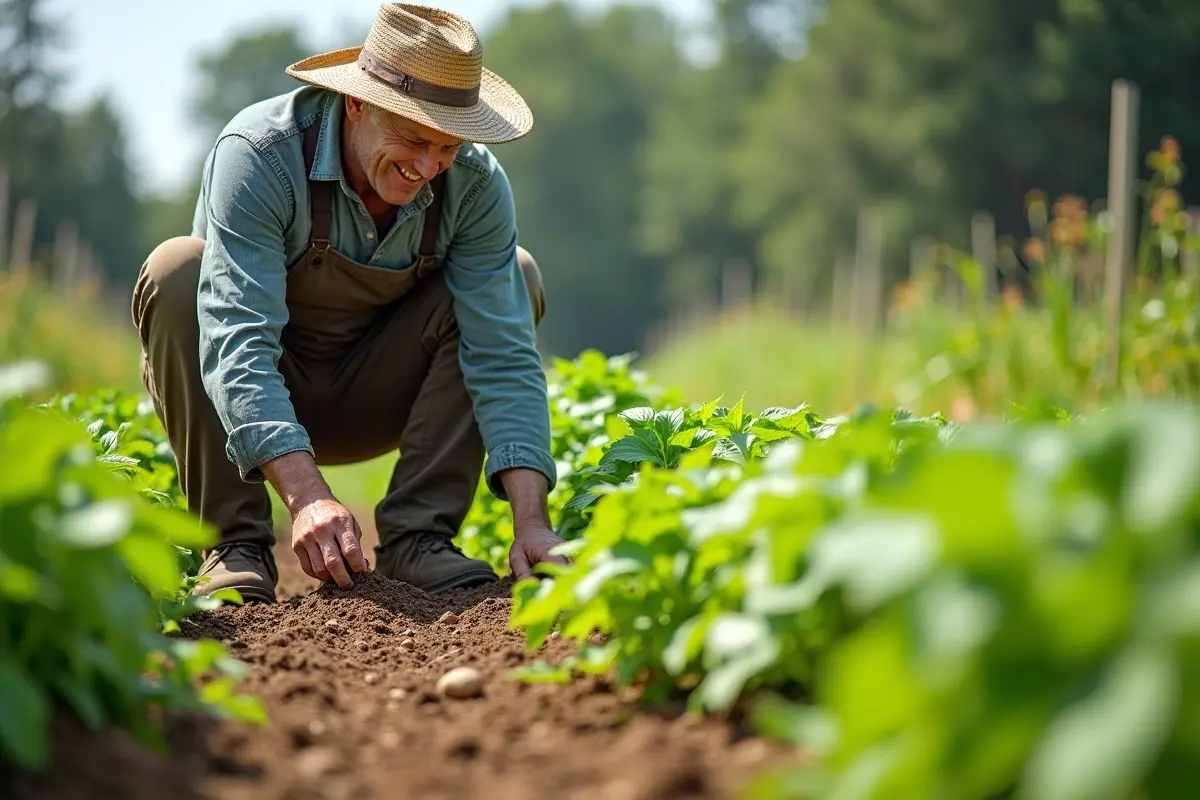
The agricultural landscape is undergoing a massive shift. For decades, large-scale farming relied almost exclusively on synthetic inputs to drive production. But today, a growing number of professional growers and small-scale farmers are moving back to basics. The transition to organic garden fertilizer is not just a trend driven by consumer demand for organic produce; it is a calculated business and environmental decision.
Farmers are realizing that the old way of chemical-intensive farming is a race to the bottom. It depletes the soil, poisons the water, and creates a cycle of dependency that is no longer sustainable. By looking toward the standards of regenerative pioneers like Mil Agro, farmers are discovering that building a healthy ecosystem is the only way to ensure the long term survival of their land.
The Collapse of the Synthetic Model
To understand why farmers are switching, we have to look at what is happening to the soil under conventional management. Synthetic fertilizers are essentially salts. When they are applied in high volumes year after year, they change the chemistry of the earth. They kill off the beneficial microbes and fungi that are responsible for natural nutrient cycling.
Without these microbes, the soil becomes compacted and loses its ability to hold water. This leads to a terrifying cycle where the farmer has to use more and more fertilizer every year just to get the same yield. This is known as the law of diminishing returns. Farmers are seeing their input costs skyrocket while their soil health plummets. Switching to an organic garden fertilizer allows them to break this cycle by reinvesting in the biological capital of their land.
Restoring the Soil Food Web
When a farmer switches to organic inputs, they are essentially hiring billions of tiny workers. A healthy soil food web is a complex system of bacteria, fungi, protozoa, and earthworms. These organisms take the raw materials in organic garden fertilizer and turn them into a form that plants can actually use.
One of the most important players in this system is the mycorrhizal fungi. These fungi form a symbiotic relationship with plant roots, effectively acting as an extension of the root system. They can reach into tiny pores in the soil to find water and phosphorus that the plant could never access on its own. Synthetic fertilizers often kill these fungi because the high salt content is toxic to them. By switching to organic, farmers allow these fungal networks to rebuild, which leads to plants that are more resilient to drought and disease.
Key Benefits Driving the Switch
Farmers are making the change because organic garden fertilizer provides a range of practical advantages that synthetic chemicals simply cannot match. Some of the most significant reasons include:
- Improved Water Retention: Organic matter acts like a sponge, allowing soil to hold onto moisture during heatwaves and reducing the need for constant irrigation.
- Increased Nutrient Density: Crops grown in biologically active soil often contain more vitamins and minerals, meeting the rising consumer demand for high-quality food.
- Natural Pest Resistance: Plants fed with organic nutrients develop stronger cell walls, making it harder for insects and diseases to penetrate the crop.
- Sustainable Soil Structure: Organic inputs prevent soil compaction, ensuring that roots can grow deep and access the oxygen they need to thrive.
Permaculture at Scale
While permaculture is often associated with small backyard gardens, its principles are increasingly being applied to large-scale farming. This ecosystem approach is a major driver for the switch to organic fertilizers. In a permaculture system, every element supports another.
Farmers are moving away from monocultures and toward biodiverse systems. They are using organic garden fertilizer to support cover crops like clover and vetch, which fix nitrogen from the air. This reduces the need for external nitrogen inputs. They are also seeing that when they support a biodiverse soil, they get a biodiverse range of beneficial insects.
When a farm is treated as an ecosystem rather than a factory, the need for chemical pesticides and herbicides drops significantly. Healthy, organically fed plants have stronger natural defense compounds that repel pests. For a farmer, this means lower costs and less exposure to toxic chemicals.
The Economics of Long-Term Yield
There is a common misconception that organic farming results in lower yields. While there can be a transition period where the soil is detoxifying from chemicals, the long-term yields of organic systems are often more stable. This is especially true during years of extreme weather.
Because organic garden fertilizer increases the organic matter in the soil, the ground acts like a sponge. In a drought year, an organic farm will hold onto moisture much longer than a conventional farm with compacted soil. In a flood year, the improved soil structure allows water to infiltrate rather than run off and take the topsoil with it.
For a farmer, this resilience is the ultimate insurance policy. As climate change makes weather patterns more unpredictable, the ability of organic soil to buffer against extremes is a major reason for the switch. Furthermore, the market for organic produce is growing rapidly, and consumers are willing to pay a premium for food grown without synthetic chemicals. This makes the switch to organic garden fertilizer a smart financial move.
Reducing the Carbon Footprint
Agriculture is one of the largest contributors to global greenhouse gas emissions. Much of this comes from the production and application of synthetic nitrogen. The Haber-Bosch process, which is used to make synthetic fertilizer, is incredibly energy-intensive and relies on natural gas. Once applied, much of that nitrogen is lost to the atmosphere as nitrous oxide, a potent greenhouse gas.
Organic fertilizers, like those advocated by Mil Agro, help turn the farm into a carbon sink. By building soil organic matter, farmers are literally pulling carbon out of the sky and locking it into the ground. This process, known as carbon sequestration, is a vital tool in the fight against climate change. Farmers today want to be part of the solution rather than part of the problem. By switching to organic, they are helping to cool the planet while they feed it.
Closing the Nutrient Loop
In a natural ecosystem, there is no such thing as waste. Everything is recycled. Modern industrial farming broke that loop by bringing in outside chemicals and shipping out the harvest, leaving the soil empty.
Switching to organic garden fertilizer allows farmers to close that loop again. Many organic fertilizers are made from byproducts of the food and timber industries that would otherwise end up in landfills. By repurposing these materials, farmers are participating in a circular economy. This reduces waste and ensures that nutrients are returned to the earth where they belong.
Conclusion: A New Era for Agriculture
The switch to organic garden fertilizer represents a new era of intelligence in farming. It is a move away from the quick-fix mentality and toward a deep understanding of biology and ecology. Farmers are realizing that they are not just growers of crops; they are stewards of the land.
By embracing the principles of biodiversity, permaculture, and soil health, they are building a future that is more resilient, more profitable, and more sustainable. Brands like Mil Agro are helping to lead this charge, providing the tools and knowledge needed to rebuild our broken food system from the ground up. The science is clear: the health of the plant is entirely dependent on the health of the soil. When we feed the earth correctly, it feeds us back in abundance.